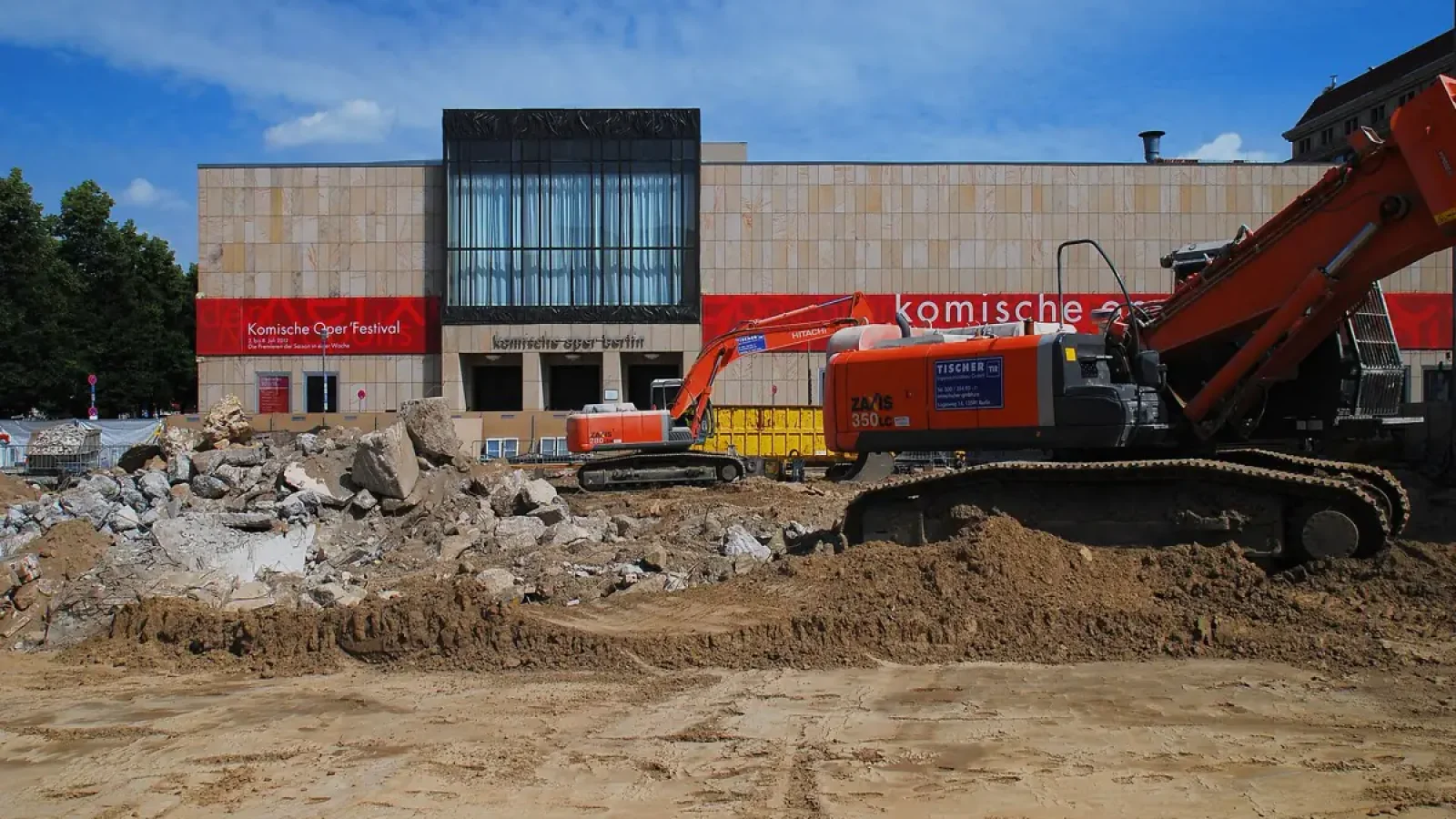
The Komische Oper will not be back in its house on Behrenstraße in 2029. At a site visit on 20 November 2026, co-director Susanne Moser told dpa that she hopes to reopen at the start of the 2030s. On the same day the house announced that the building permit for the main works had been approved. The Komische Oper renovation, now estimated at about €477 million, can finally move from demolition to construction.
Why the Komische Oper renovation keeps slipping
The opera house closed in summer 2023. The plan was a six-year job: a full overhaul of the house Walter Felsenstein's company has played in since 1947, last rebuilt in the 1960s, plus a new extension with rehearsal rooms, offices, a café, a shop and a roof terrace. That pointed to a return in 2029. By early 2025, the project management was already giving a range of 2030 to 2033. On Friday it named no date at all. The house's own post on the permit counts "10 years, 1 month and 28 days" to reach this point. Groundbreaking for the extension is planned for August 2027, according to Berlin's building senator Christian Gaebler.
The cost has moved too. Wikipedia, citing earlier reporting, puts the Senate's commitment at €437 million; dpa now gives about €477 million. About a third of that has been spent or contracted, Moser said. To stay on schedule, the project needs €60 to 70 million in construction money every year. Co-director Philip Bröking warned that the house's reserves will run out in 2029, 2030 at the latest. After that, he said, it is up to Berlin's cultural policy.
This is not the first warning. In November 2024, when the then CDU–SPD Senate cut Berlin's culture budget, Moser and Bröking calculated that a two-year building stop would save €10 million but add about €250 million in costs and at least four years. Former director Barrie Kosky wrote an open letter in the Tagesspiegel at the time. The building work went on, but the question of yearly funding now lands on the Linke, Greens and SPD, who are negotiating Berlin's next government and have so far promised culture little that comes with figures (see our pieces on the free museum Sunday and the artist studio programme).
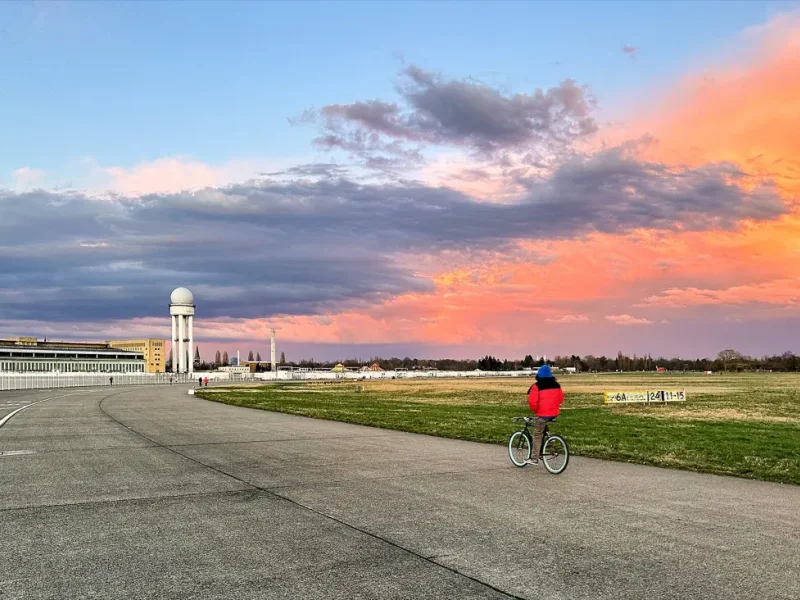
The Komische Oper is in a queue. The Philharmonie faces an estimated €800 million renovation from about 2032, and its orchestra wants to spend those years in the Tempelhof hangars (our report). The Komische Oper is already there in part: dpa reports its next season opens with a project by Florentina Holzinger in a Tempelhof hangar.
What it means for opera-goers
The company keeps playing, just not in Mitte. Its main stage is the Schillertheater on Bismarckstraße in Charlottenburg, which has about 1,000 seats, roughly 200 fewer than Behrenstraße, and dpa reports that logistics there may mean fewer performances. Tickets cost €10 to €125 depending on the seat and the production. Children up to 14 pay €10 with an adult.
The closest stations are Ernst-Reuter-Platz and Deutsche Oper on the U2, but neither has a lift. Bismarckstraße (U2, U7) does. The Schillertheater has four wheelchair spaces and a step-free entrance to the left of the main door.
Good to know
- Status: permit granted, interior gutted, main construction starting. No reopening date.
- Box office: Unter den Linden 41, Mon–Sat 11am–6pm, and at the Schillertheater Wed–Fri 4–6pm and an hour before shows.
- See the project: the Infozentrum at Unter den Linden 41 displays pieces of the old house and plans for the new one.
Sources
- dpa via Berliner Abendblatt: Komische Oper: Intendanten drängen auf schnelle Sanierung (20 November 2026)
- Komische Oper Berlin: Sanierung, with the news on the building permit (20 November 2026)
- Komische Oper Berlin: Schillertheater, getting there and access
- Tagesspiegel: Barrie Kosky's open letter to the Berlin Senate (November 2024)
- Wikipedia: Komische Oper Berlin (German)